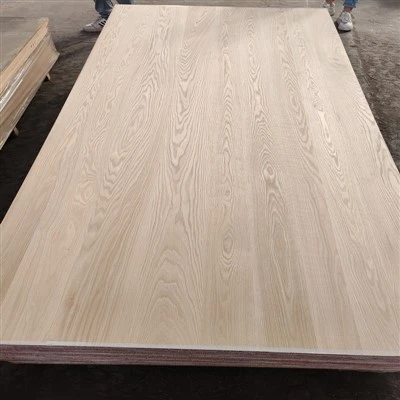
1. Formaldehyde. According to national standards, the formaldehyde emission limit of the blockboard is E1 ≤ 0.124mg/m3. The unqualified quality of the blockboard sold in the market mainly involves two aspects: First, the formaldehyde emission exceeds the standard, which poses a serious threat to human health; second, the formaldehyde emission of some products is within the E2 level, and Did not reach the E1 level, but marked the E1 level. This is also unqualified.
2. Lateral static bending strength. The transverse static bending strength and the bonding strength reflect the ability of the blockboard product to bear the force and resist the deformation of the force. There are three main reasons for the failure of lateral static bending strength. First, the raw materials themselves are defective or decayed, and the core quality is not good. Second, in the production process, the splicing technology does not meet the standard; the third is that the glue work is not done well.
3. Gluing strength. Gluing performance mainly has three process parameters, namely time, temperature and pressure. The use of adhesives is more and less, and it also affects the formaldehyde emission index.
4. Moisture content. The water content is an index reflecting the water content of the blockboard. If the water content is too high or uneven, the product may be warped or uneven during use, which may affect the performance of the product.